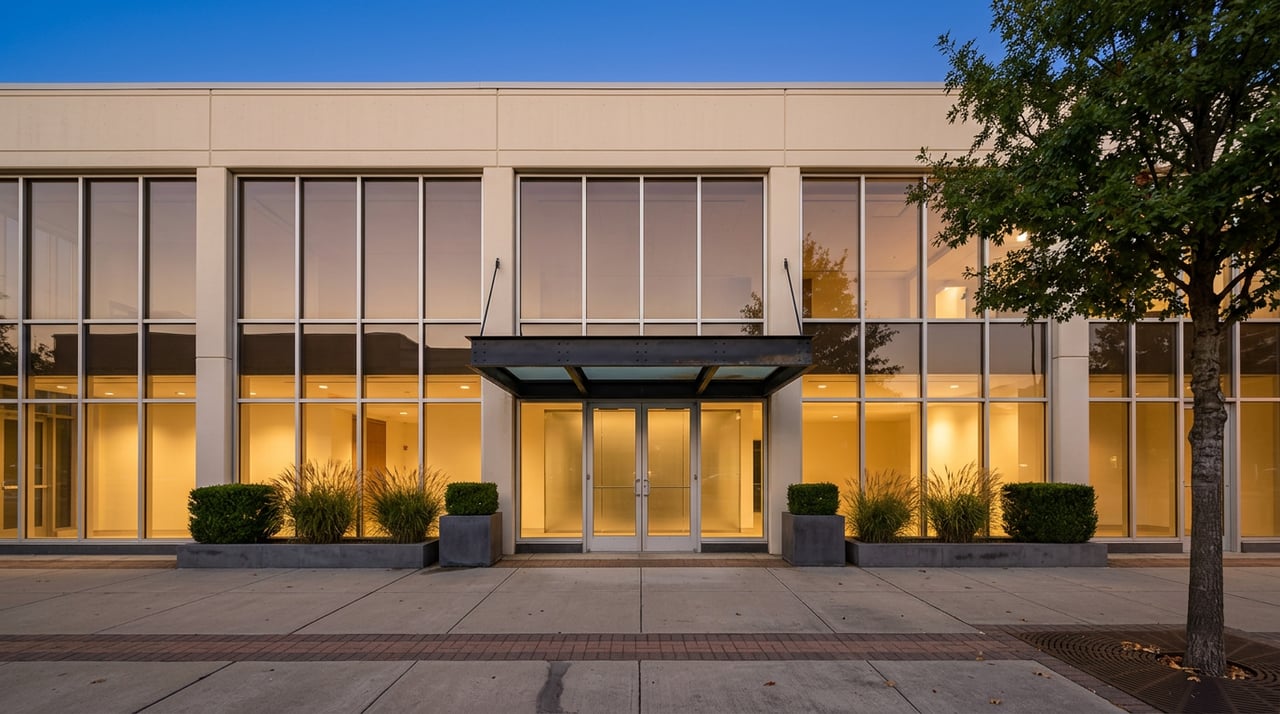
The Gulch Turned Twenty-Five This Year. Its Pipes Didn't Get The Memo.
September 3, 2026
September 3, 2026
Pine Street closed on a Friday morning in late August, and for anyone who wasn't personally rerouting around 11th and 12th Avenues South, it barely registered. A gas leak, a block cordoned off, Nashville Fire Department crews on scene until the source was found and traffic could move again. The kind of interruption every city has on a rotating basis, forgotten by dinner.
Except in The Gulch, that one closed block sits inside a neighborhood that has spent the past year adding new restaurants at a pace most districts never see. A rooftop bar with skyline views. A national salad chain's first Nashville location. A tasting-menu institution relocating to a bigger home. Two restaurants from one of the most decorated chefs in the country. The pace of what gets built on top of the ground has almost nothing to do with the pace of what gets maintained underneath it, and for one Friday morning, that gap became visible to anyone stuck in traffic on Division Street.
That gap, not the food scene itself, is the actual story of The Gulch right now.
Start with the restaurants, because they're the part everyone already half-knows. COA opened atop the Canopy by Hilton on March 6, bringing a Tulum-inspired rooftop and agave-forward cocktail list to the corner of Division and Overton. Sweetgreen picked The Gulch for its first-ever Nashville location, opening June 30 at 341 11th Avenue South, a few steps from Noble Park. The Catbird Seat, one of the city's original tasting-menu restaurants, found a new home in the neighborhood this year. Jose Andres brought both Zaytinya and Bar Mar into the W Hotel's food program, his first real footprint in Nashville. And Naked Farmer, the fast-casual protein-bowl spot that just opened its debut Nashville location downtown, has a second one slated for The Gulch this fall.
That's several new restaurant concepts landing within a single calendar year, inside a neighborhood that already counts more than 60 dining establishments anchored along just three streets: 12th Avenue South, Division Street, and McGavock Street. For context, Metro Councilmember Jacob Kupin, who represents the district and also works as a real estate agent, put the broader arc this way in a recent interview:
"It's crazy to think that this development took 25 years and it's still going."
Twenty-five years is the right frame. Kupin has described watching buildings go up where he used to park in gravel lots to visit friends. The transformation from rail yard to restaurant row happened gradually, then all at once, and it's still compounding. New restaurants attract more restaurants. New residents attract more retail. The momentum Kupin describes is real and it's the reason a neighborhood built for industrial rail traffic a century ago now supports a Jose Andres restaurant and a rooftop with Tulum styling.
Here's the number that puts the restaurant boom in perspective: The Gulch has an estimated resident population of roughly 2,500 people, per census figures cited by neighborhood platforms. That means a district with 60-plus places to eat has a full-time population smaller than a single elementary school's attendance zone in most of Nashville's suburbs. Almost everything built in The Gulch over the past several years has been built for volume, for visitors, workers, and diners moving through, not for a large stationary residential base.
That mismatch matters because it explains why a single gas leak on Pine Street becomes newsworthy at all. A neighborhood engineered around a small residential core and a huge daytime and evening traffic load puts unusual pressure on utility lines, traffic signals, and streets that were never resized for this much foot and car traffic layered on top of decades-old infrastructure. Restaurants can open in months. Gas lines, water mains, and traffic patterns get upgraded on a much slower, much less photogenic schedule, and when they fail even briefly, the failure lands in the middle of a neighborhood that's busier than its infrastructure was built to handle.
The city has started to notice. Mayor Freddie O'Connell recently announced that the area south of Broadway, which includes The Gulch, is slated to get its own transit center, a move Kupin has called significant for public transit access in the district. That's the slower clock finally getting attention. It won't move at the speed of a restaurant opening, but it's evidence the mismatch hasn't gone unnoticed at the level that actually controls infrastructure spending.
Not everything in The Gulch runs on the fast clock. Some of the neighborhood's rhythms are deliberately, almost stubbornly, steady. On the first Wednesday of every month, Gulch Dog Park hosts Doggie Date, a recurring meetup where the first 25 arrivals get a free pup cup and a scoop of dog-friendly ice cream. It's a small, unglamorous ritual, but it's also one of the few fixed points in a neighborhood where the restaurant lineup can look meaningfully different every quarter. If you live here, that monthly dog park gathering probably tells you more about the neighborhood's actual day-to-day texture than any list of new openings does. It's proof that residents have built their own consistency into a place that otherwise reinvents its storefronts constantly.
The Station Inn, the bluegrass venue that predates most of the glass towers around it, does something similar. It hasn't changed its format to match the neighborhood's newer, flashier tenants, and that's part of why it still matters to people who live here. In a district defined by turnover, the things that don't turn over are doing real work.
The most ambitious project currently rising in The Gulch is the Nashville EDITION, a 28-story, $400 million tower from Tidal Real Estate Partners that broke ground this year. It will bring 261 hotel rooms and 84 private condominium residences to the neighborhood, with a glass facade designed by the Nashville-based firm ESa and interiors from New York's INC Architecture & Design. It's slated to open in 2028, two years from now, which means the neighborhood's next visible chapter is already locked into the skyline even as this year's restaurant additions are still settling in.
That's the pattern to watch. The Gulch keeps stacking ambitious, fast-moving additions, first restaurants, then towers, on top of infrastructure that was sized for a much smaller, much less dense version of the neighborhood. The city's transit center announcement suggests the slower systems are starting to catch up. Whether they catch up fast enough to keep pace with a neighborhood that adds a restaurant every six weeks and a 28-story tower every few years is the actual question hanging over The Gulch right now, more than any single opening or closure.
If you live in The Gulch, none of this changes your Tuesday. It does explain why a routine repair on Pine Street felt like it was happening in the middle of everything, because it was. The neighborhood has gotten very good at building new things quickly. It's still learning how to maintain what's already there at the same speed.
For residents curious about what any of this means for property values, timing, or simply understanding how a neighborhood this fast-moving holds its value over time, Beth Molteni has spent decades tracking exactly these kinds of shifts across Nashville's most dynamic pockets. A conversation costs nothing and often clarifies more than a year of headlines can.
Stay up to date on the latest real estate trends.
Etiam non quam lacus suspendisse faucibus interdum. Orci ac auctor augue mauris augue neque. Bibendum at varius vel pharetra. Viverra orci sagittis eu volutpat.
Beth Molteni
3825 Bedford Ave Ste 102 Nashville TN 37215