Luxury design in 2025 is less about showing off and more about showing care. You want spaces that look extraordinary, feel restorative, perform efficiently, and adapt to how you actually live. Materials are elevated, technology becomes quieter and more intuitive, and every room works more efficiently, whether that means nurturing your well-being, staging unforgettable gatherings, or protecting long-term resale value. The best part: you can express personality without sacrificing restraint. You can honor craft while embracing innovation. You can design for today and still future-proof for tomorrow.
Conscious Luxury
In many upscale homes, you’ll see reclaimed hardwoods finished by hand, stone remnants recut into fluted panels, and metals that patina beautifully instead of demanding constant polishing. Artists are taking center stage, producing limited, heirloom-quality pieces that can be repaired, reconfigured, and passed on. This approach satisfies the desire for rarity, but it also speaks to durability and long-term value. You invest once, you cherish it, and you minimize waste.
You will also notice a heightened focus on provenance. The origin stories of artistic pieces are becoming part of the design narrative, giving your home depth, character, and a sense of intention that outlasts fast trends.
Quiet Technology That Disappears Into The Background
In 2025, the most impressive tech is the tech you barely notice. Lighting systems tune color temperature to your circadian rhythm without you having to think about it. Acoustic treatments are embedded behind plaster or within wall paneling so that your grand room sounds as clear as a concert hall. Motorized shading hides within millwork. Wellness sensors track air quality and humidity to keep your interiors comfortable and healthy. Interfaces are simplified, voice control is subtler, and rooms look calm because screens, wires, and controls are integrated, minimized, or concealed.
This philosophy liberates your design choices. You do not have to compromise the lines of a coffered ceiling to accommodate a speaker or crowd a stone slab backsplash with switches. The architecture leads, and the technology follows.
Biophilic Architecture: True Indoor–Outdoor Continuity
Biophilic design is no longer simply a potted plant near the window. It is structural and immersive. Architects are opening entire corners of homes with pocketing glass walls. They are carving light courts into floor plates to pull sun and sky deep into the design. You see interior gardens, living walls that double as natural air filters, and water features that regulate microclimates while creating a soothing acoustic backdrop.
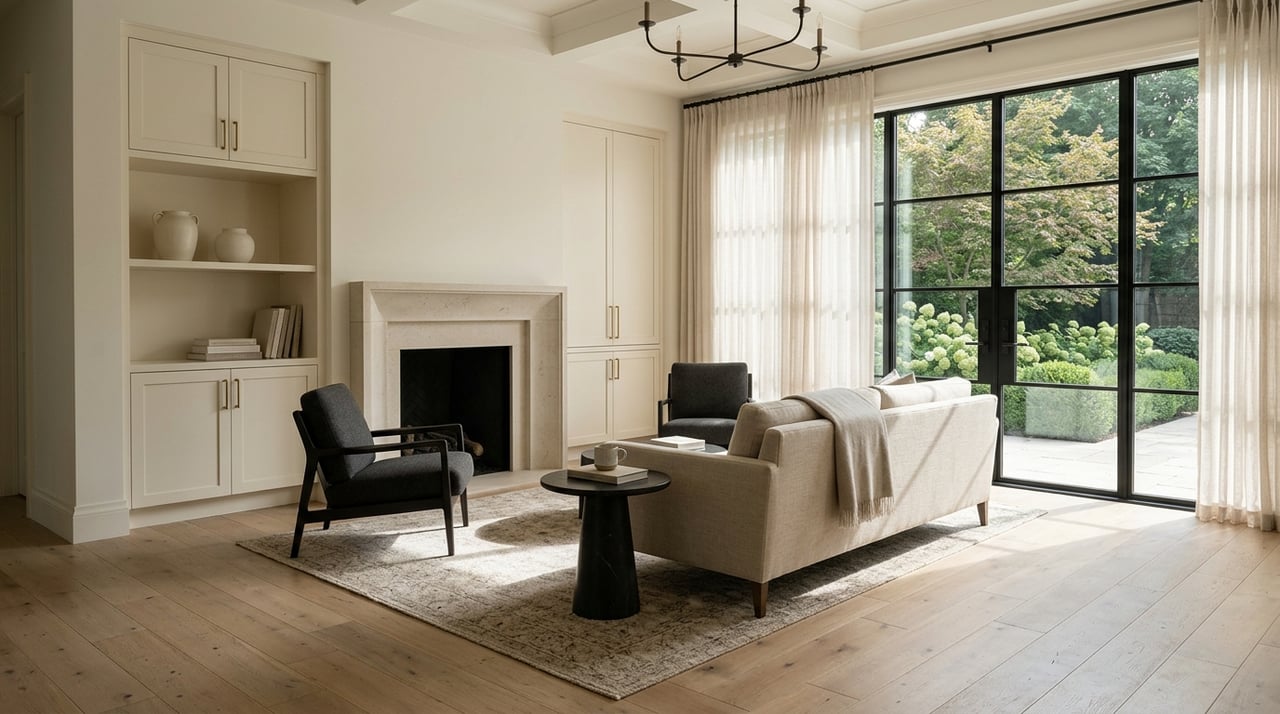
You want the same material palette inside and out so that your sightlines feel continuous. Clay plaster travels from the living room to the patio. Travertine pavers extend from the pool deck into the kitchen. The transition is barely perceptible, which makes your home feel larger, more fluid, and more serene.
Texture, Tactility, And The Return Of Honest Finishes
After years of ultra-sleek minimalism, rich texture is back in full force. You’ll find limewash with subtle movement, leathered and flamed stone surfaces, heavily grained rift-cut oak, boucle and mohair upholstery, and handmade ceramic tiles with imperfect edges. These finishes absorb and reflect light differently throughout the day so that your home never looks static or flat.
Texture also communicates luxury without shouting. It is quiet, sophisticated, and layered. When you run your hand over a fluted stone fireplace or a handwoven wool rug, you feel the artistry immediately. It anchors the design in authenticity, and it photographs beautifully, which matters when you eventually market the property.
Social Kitchens, Culinary Laboratories, And Working Pantries
The kitchen continues to evolve as the de facto social core, but in 2025, it is also a culinary laboratory. You want professional-grade induction, steam ovens, built-in sous vide drawers, and rapid-chill refrigeration columns that manage food like a Michelin kitchen would. At the same time, finishes are warmer and more furniture-like, with panel-front appliances, integrated pulls, and statement stone islands with dramatic veining and sculpted edges.
Working pantries carry more weight than ever. They store countertop appliances, house additional dishwashers and refrigeration, and serve as a staging area for catered events. This keeps the primary kitchen visually pristine while letting you entertain at scale. It is both lifestyle-enhancing and resale-smart.
Wellness Suites, Longevity Rooms, And Spa-First Bathrooms
Wellness is no longer a feature. It is a full program. Primary suites are evolving into wellness suites with infrared saunas, cold plunge tubs, red light therapy corners, yoga space, and high-ventilation fresh air delivery. Bathrooms lean into oversized stone slabs, integrated stone sinks, low-glare lighting, and aromatherapy steam showers.
Materials in these rooms must be soothing and easy on the senses. You want clean, rounded edges, warm neutrals, and natural stone that feels cool to the touch. The goal is a retreat that restores you daily, not just a room you visit when you have time.
Art As Architecture, Architecture As Art
Collectible design is moving from accessory to structure. You see hand-carved stone screens that filter light like sculptures, staircases that act as gallery installations, and custom metalwork that frames views like art. Commissioned furniture sets the tone for entire rooms, and ceilings receive the same level of detail as floors. This approach ensures that even when spaces are minimally furnished, they feel complete and visually compelling.
Curators and art advisers are entering projects early. They coordinate with architects to choreograph sightlines, ensure proper lighting, and weave the collection into the architecture itself. The result is a home where every angle is intentional and every wall has purpose.
Outdoor Living As Primary Living
Outdoor spaces are no longer “extras.” They are fully realized rooms with climate control, full kitchens, audio, weather-resistant upholstery that feels as soft as indoor fabric, and layered landscaping. Year-round use is the goal. Misting in the warmer months, radiant heat in the cooler ones, and flexible shading make terraces, pavilions, and roof decks usable most days of the year.
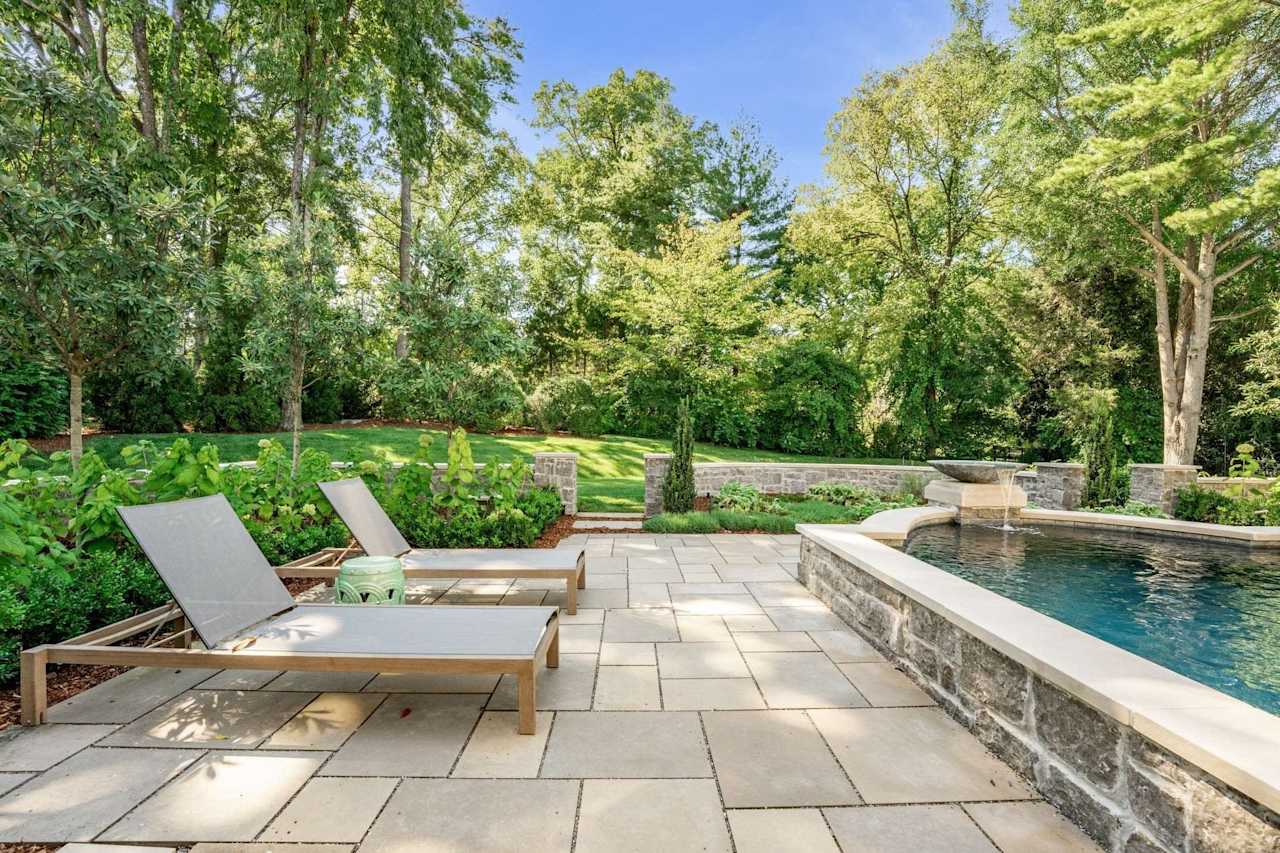
Water is both sculptural and therapeutic. Reflecting pools frame the views. Baja shelves double as tanning ledges and play areas. Naturalistic swim ponds reduce chemical loads and create a sense of tranquility that traditional pools struggle to match.
Color, Metals, And The New Neutrality
Neutrals are not going anywhere, but they are warmer, earthier, and more complex. Think mushroom, greige with a hint of olive, sandy taupe, and soft clay. These hues pair beautifully with richly veined marbles, aged brass, smoked bronze, and blackened steel. You also see brave color moments: deep oxblood libraries, ultramarine powder rooms, and emerald velvet banquettes. The rule is simple: keep the architecture calm, and let accent volumes or signature pieces make the statement.
Metals are mixed thoughtfully. It is no longer taboo to combine satin brass with burnished nickel, as long as each has a clear role and the finish quality is high. Patina is embraced. Perfection is less important than character.
The Bottom Line
Luxury design in 2025 rewards intention. If you design with purpose, your spaces will look current today, remain desirable years from now, and tell a story that resonates with discerning buyers and guests alike. If you’re ready to achieve your homeownership goals in Forest Hills, team up with Beth Molteni for expert insight.